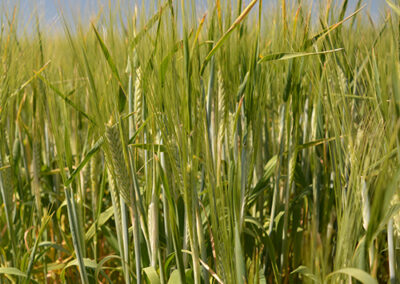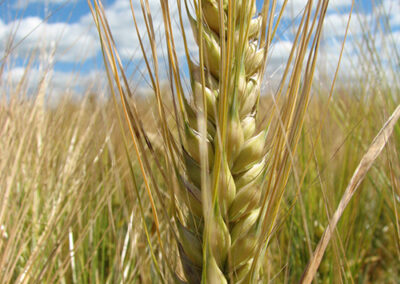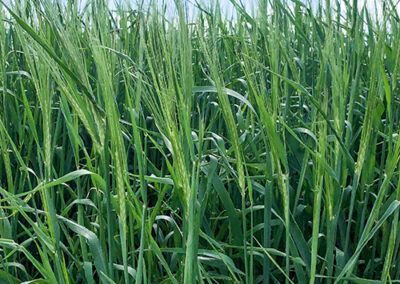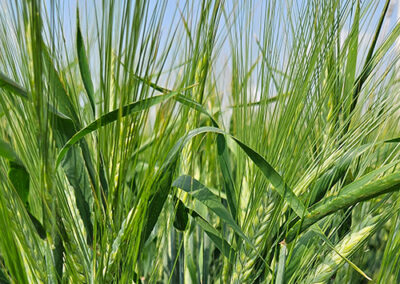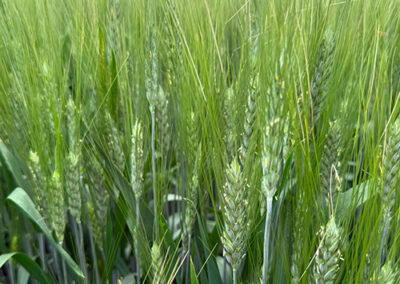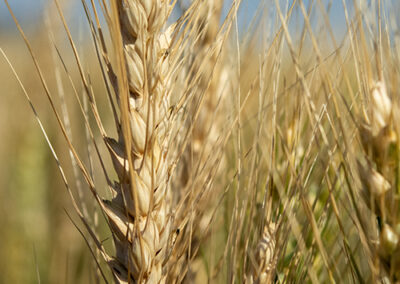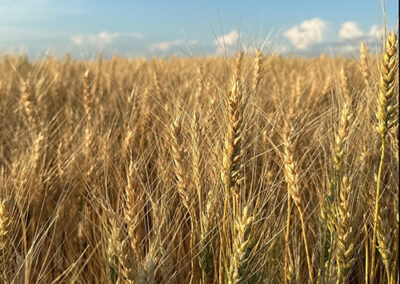
High yield potential
Excellent standability
Strong disease resistance
[NEW 2029] - One of the most complete feed barley packages we've seen in years.
Trusted in tough conditions. WCI Melville is a strong new addition to our feed barley portfolio, offering top-end yield performance across all three Prairie provinces. This two-row, hulled variety brings together the increased yield strength over CDC Austenson and the disease resistance of AB Wrangler, resulting in a well-balanced and high-performing option for Western Canadian growers. WCI does a great job of researching both grain and forage varieties.
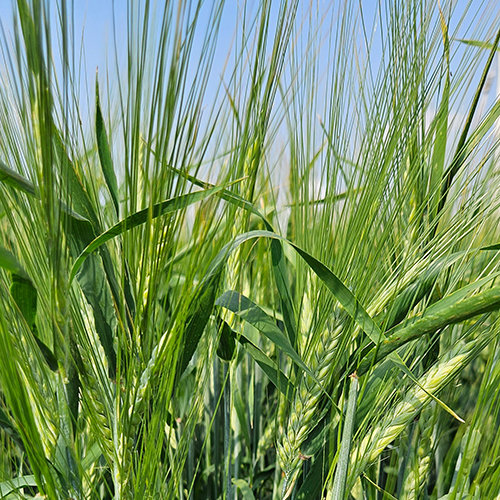
• Mean grain yield is 5% higher than CDC Austenson.
• Forage dry matter yield is 5% higher than CDC Austenson and AB Cattlelac, 2% higher than CDC Cowboy.
• Resistant to lodging, better than all the checks, with a mean rating of 1.9 for FB23618 vs 2.4 for CDC Austenson.
• Large, plump kernels > CDC Austenson.
• Good disease resistance package with R or MR overall ratings to scald, surface-borne smut, stem rust; and intermediate reactions to FHB, net form of net blotch, spot form of net blotch, spot blotch, and loose smut.

| Maturity: | +1 Days vs CDC Austenson |
| Height: | -1cm vs CDC Austenson |
| Lodging Resistance: | Very Good (1.9) |
| Loose Smut Rating: | I |
| Other Smuts Rating: | MR |
| Scald Rating: | MS |
| Net Blotch – Net Form Rating: | I |
| Net Blotch – Spot Form Rating: | I |
CDC Austenson, AB Wrangler

Charles Melville "Red" Williams
Enlisted in the Royal Canadian Navy in February 1942 while living in Calgary. He took his basic training in Ottawa and was initially drafted to Dartmouth, NS before sailing overseas to join the HMCS Sioux, his home for the duration of the war. The Sioux sailed in the Atlantic and in Arctic convoys to Murmansk, a northern port in Russia. The Sioux was the first Canadian Navy Ship present on D-Day.